August 17, 2026
For many manufacturers, a showroom or trade show booth represents a significant investment, yet often, these spaces are viewed as temporary displays or product showcases rather than strategic business assets.
Today’s B2B buyers — particularly architects, designers, specifiers and dealers — aren’t looking to be sold to. They want to learn. They want to solve design challenges, compare solutions, ask technical questions and understand how products perform in real-world applications.
When thoughtful spatial design is combined with strategic communications, a showroom or booth becomes far more than a place to exhibit products. It becomes a powerful platform for sales, education and long-term relationship building.
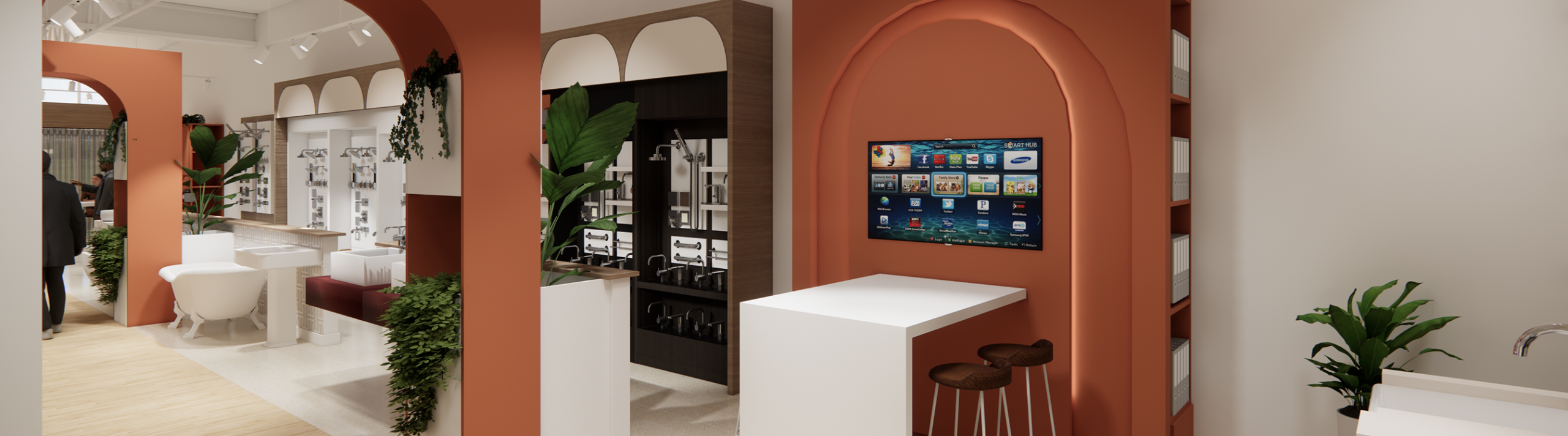
The physical environment sets the tone long before anyone speaks. A well-designed showroom or booth should naturally guide visitors through a journey. Every element from the layout and lighting to product placement and meeting areas should support how people discover, interact with and understand your products.
Successful environments are designed around people, not products. An intuitive layout encourages exploration, creates opportunities for meaningful conversations and makes visitors feel comfortable enough to spend time engaging with your brand. Rather than simply maximizing visibility, the goal is to create a space that balances aesthetics, functionality and flow to support the entire customer experience.Â
Think less about fitting in every product you manufacture and more about creating intentional spaces for demonstration, discussion and discovery.
Many manufacturers organize their booths or showrooms around product categories. Instead, organize them around the problems your customers are trying to solve.
For architects and designers, that might include:
When visitors see products working together within a real application, they begin to understand not only what your products do, but why they matter. This approach transforms a showroom from a collection of displays into a learning environment.
Technical specifications remain important but they rarely create lasting impressions on their own. Storytelling does.
For manufacturers, storytelling might mean showing how your products contribute to greener buildings, simplify installation, improve occupant wellbeing or support sustainable construction. Rather than presenting products individually, demonstrate how they solve real design challenges within complete environments.
Education has become one of the most valuable tools in B2B marketing. Your showroom or booth should make learning easy through:
The more interactive the experience, the more memorable it becomes. This is especially important when engaging the architecture and design community, where product understanding often plays a critical role in specification decisions.
Stay tuned for part II coming soon!
This article was developed collaboratively by Zenergy Communications and trafic. Zenergy helps manufacturers build stronger brand identities and connect with key audiences through its strategic marketing communications engagement platform, A&D Link, while trafic specializes in designing immersive showrooms, tradeshow booths and commercial environments. Together, they help manufacturers create spaces that not only showcase products, but also educate, engage and drive business growth.
Interested in learning more about how Zenergy and trafic can help bring your next showroom or tradeshow booth to life?
At Zenergy, we help organizations integrate marketing and communications so that strategy, performance, and positioning are expressed with clarity, consistency, and credibility.
Zenergy Communications
info@zenergycom.com